4/15/12

Dance Response: Hubbard Street 2

On Saturday, April 14 I attended the performance by Hubbard Street 2 in the Olmsted Theater. I’ve seen some YouTube videos of the Hubbard Street main company, but this show wasn’t actually exactly as I expected it to be. And it was both impressive and depressing, for me personally.

The first piece in the program, never did run smooth, choreographed by Gabrielle Lamb, was my least favorite. Not that it was bad by any means, I just thought parts of the choreography were a little “cute” for my taste. It simply wasn’t very exciting or moving—musically, in terms of stage elements, or choreographically. But luckily, things started to pick up pace in the next dance. Never was, by Alejandro Cerrudo, set to two very different Baroque-era musical pieces by Handel and Purcell, had more of the things I want to see at a dance performance. The piece began dramatically, but not overly so; two dancers, Emilie Leriche and Johnny McMillan, were lit by a circle of strong white light from above. Their costumes were simple almost to the point of being severe; the drum processional music by Purcell added to this severity. And, most importantly, the movement was strong and intense, with an air of being warriors. The two dancers were very sharp and precise in their movements.

My favorite piece was the third. HS2 dancer Johnny McMillan choreographed this piece with the Sami people, nomadic reindeer herders native to Norway, in mind. He used folkloric music by Sami musicians such as Pekka Lehti and Mari Boine—and this was perhaps one of my favorite elements of the piece. McMillan listened to all the intricacies of the singer’s voice and the movement corresponded to the sounds. Each movement seemed to me to be an emotional response to the singer’s raw voice, so the movement and sound were one. The use of fake fall-colored leaves onstage wasn’t totally necessary, but they were beautiful when they got swirled around by the wind from the dancer’s movement. At times, the movement was uncomfortable—raw and explicit, eliciting discomfort in the form of snorts of laughs or whispers from some audience members. That’s also one of the things I liked about it. I think it’s good to have awkward or unusual moments in choreography. If all you want to see is pretty stuff, go see a ballet. If you want to broaden your mind and feel something (other than contentedness and “wasn’t that nice, dear”), have a visceral response to what you’re seeing, then this is what you’re looking for. The choreography was fast, intense, primitive, and also beautiful. It was the type of dancing that is so impressive, I thought, “I’m not sure I could ever do that.”

The fourth piece, sad monsters, choreographed by Maurya Kerr, was not for me. It was a little too Sidra Bell. I didn’t like the “fierce” intensity and I absolutely hated the costumes (black turtlenecks and booty shorts). The last duet was pretty great, but in general I didn’t click with this piece.

PACOPEPEPLUTO, choreographed by Alejandro Cerrudo to music by Dean Martin, probably gave a bunch of Long Island old ladies very good dreams. It was a series of three male solos, again in white light, and the kicker is that all they wore was a dance belt (“costume design, Rebecca Shouse,” struck me as funny). Each of the solos was beautiful, but I did rather wish there were fewer times their backs faced downstage. Each dancer had his own very distinct movement quality, but they were all beautiful in their own respect. I was impressed mostly by their control—they way they could catch their balance and how they could move out of turns. The program talks about their being “enshrouded in dim lighting and fog,” but we didn’t get any fog. It must not have worked out in our theater. Anyway, Andrew Wright’s butt was my favorite.

The last piece, Bonobo, was more like what I expected from a Hubbard Street performance. The choreography, in this case by Penny Saunders, was most like what I thought it would be, based on what I’d seen online. This is also one instance where the description in the program matched what I thought of it. It was “inspired by the history of Vaudeville-type traveling tent shows from the 1920s and 1930s,” and “[featuring] an eclectic score ranging from hilarity to poignancy.” This one was the most theatrical of them all. It was a good one to end with.

One of the things that impressed me most was the dancers’ partnering skills. I’m always impressed by good partnering, because I know how hard it is. I wonder how many times they have to practice each lift to make them look like that. It made me wish that instead of working on choreography for our workshop piece in partnering class, we would spend more time practicing lifts until they are smooth and easy.

The other thing that impressed me also depressed me. All of the HS2 dancers are very young. In fact, two of them are my age, and still in college! It hit me kind of hard and made me feel very behind where I should be in my career. I’m nowhere near as good as these other college Seniors.

I thoroughly enjoyed the show and seeing how ballet technique can transform into so many other things, and how performing classical ballet isn’t the only possible end goal of practicing ballet technique. I hope that this impression was also made on Adelphi Dance’s newest members whose minds have yet to be opened to the possibilities.

2/19/12

Lar Lubovitch Dance Company at MMAC

Lar Lubovitch Dance Company performed “Histoire du Soldat” and “Crisis Variations,” accompanied by live music, at Manhattan Movement & Art Center February 11, 2012.
I was slightly surprised by the space, which struck me as being rather casual. Since non-student ticket prices ran close to $50, I guess I expected a more upscale venue.

The first piece, “Histoire du Soldat” (or “The Soldier’s Tale”) is to a 1918 score by Igor Stravinsky which the composer said was to be “read, played, and danced.” Now, I don’t know about the original script, but the modern, English version read that night is terrible. This piece could have done with a lot less reading and playing, and way more dancing. The Kindergarten-like storytelling and boring musical score made me uncomfortable. Actually, that’s an understatement. I hated the narration and couldn’t believe how painfully awful it was. But, when the dancers were actually onstage, they were wonderful and beautiful. Maybe if they had danced during the narration and music I wouldn’t have minded it so much.

Actually, the partnering in “Soldier’s Tale” tied in very nicely with what we are learning in partnering class here with Amy Marshall and Chad Levy. There was a lift in which Amy had to look completely limp. This is tricky because dead weight is hard to carry, so the person being lifted has to be able to achieve the limp look but still hold their abs. We got to witness this type of lift when “Soldier” Reid Bartelme brought out the sick “Princess” Nicole Corea, dangling under his arm.

There were a lot of partnering movements that we’re learning about in class that it was good to see executed professionally well.

Where the first piece disappointed, the second piece, “Crisis Variations,” awed and amazed. I would have seen just that for my $17. This piece actually reminded me a lot of Sylvana’s work; some of the floor work in this piece was also in Sylvana’s “May Fly.” This piece also had crazy partnering in it, as well as magical patterns, and the way they danced was fluid, as can be expected from Lubovitch’s company, but at the same time they affected limpness and flailed around wildly while maintaining impeccable technique and strength. The surprising ending was so delightful it left me giddy. This piece made me excited about dance again and gave me a new standard to strive for!

1/17/12

DIY Fabric-covered denim shorts

I've had this photo sitting in my "fashion" folder on my computer for some time, and recently looked at it again while at home.

(clicks through to my fashion Tumblr. I regret that I don't know the source of this photo. VERY SORRY; CONTACT ME IF THIS IS YOURS.)

I happened to have some cool fabric saved in my remnants suitable for the job. And some Levi's cutoffs from the Salvation Army.

As you can see in the picture, the fabric appears to be adhered to the denim without stitches; it looks like it's glued on. So I armed myself with some fabric glue, which I've never used before, so this was kind of experimental, and set to work.


You have to cut the tip off of it to start using it. I joked that it's Jewish glue. Mom didn't laugh as much as I'd hoped.

I started with what looked to be the hardest part, because that's the kind of gyal I am: the belt loop.


I cut one incision not quite the length of the belt loop, and two more diagonally to the corners, then folded under; that's how it sits flush with the loop. (In my opinion I did this much more neatly than whoever made the inspiration shorts ... )

First I tried just using the glue, but the shit totally doesn't stick right away and I don't know how long you have to hold it for it to bond. I don't have that kind of patience. So what I did was put glue down, press the fabric into place, and tack a small stitch into it through the glue, on each corner.

Then I went for the pocket. This was kind of tricky because it's curved. This would have been much harder with the cotton used on the inspo pair, but my fabric has a bit of leeway, so it curved nicely. I continued my glue/press/stitch method.


artfully dodged that rivet

Then I tackled the crotch area.


This proved the most difficult because I didn't cut it very smartly. Oh well.

And here's the final product!


Now I know why the original DIY'ers opted for the angular cuts around the zipper. That crotch part was unnecessarily challenging. Luckily the un-straight line doesn't show when I put the shorts on.

I opted for just one side for now, because I'm a little wary of this look ...


Also I didn't want it to be like the "skort" effect, where you think it's one thing in the front and then you find out you've been horribly deceived, by the back. I guess you could call it the "mullet" effect, too. Well anyway, there's still more fabric, if I change my mind.

1/16/12

Mail me this stuff?


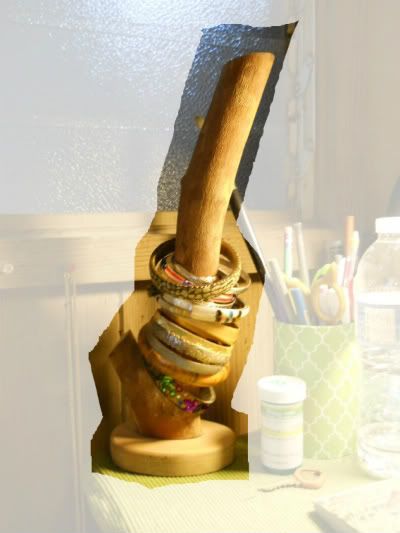
With bracelets


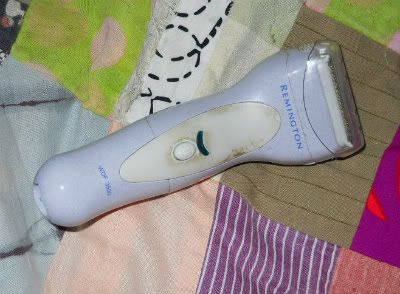
Ew, this thing is filthy. I want the charging dock too, of course.
(Tripod)
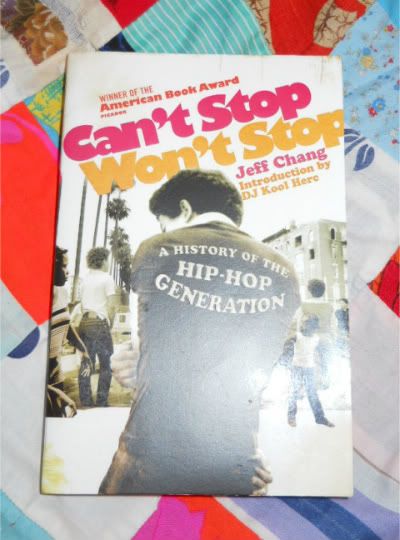
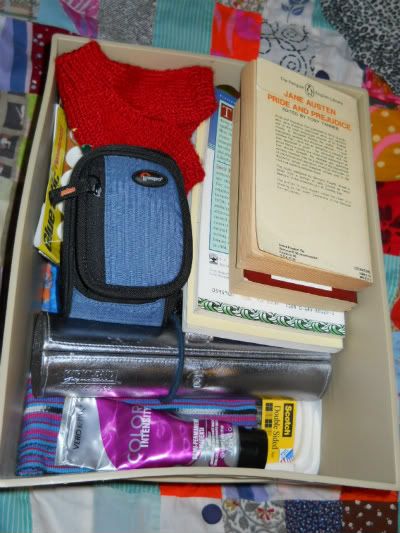
2 small photo albums, Book pictured above, as well as Delsarte spiral-bound book
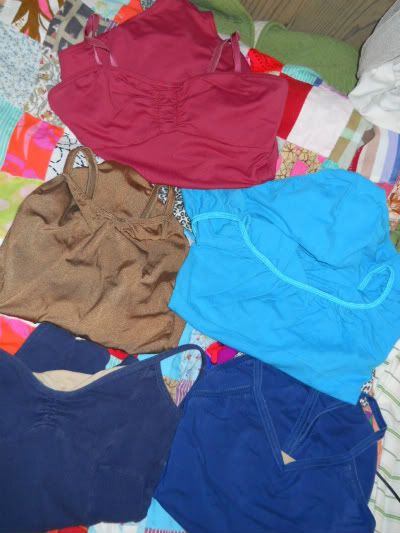
This clump of clothing. Yeah ............... sorry.
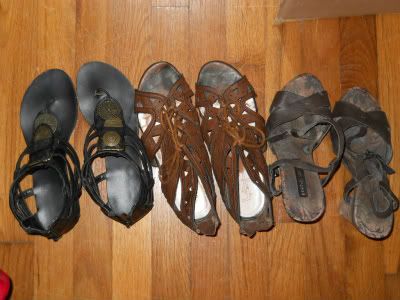
These three pairs

But I don't need Jannie's feather duster! :p
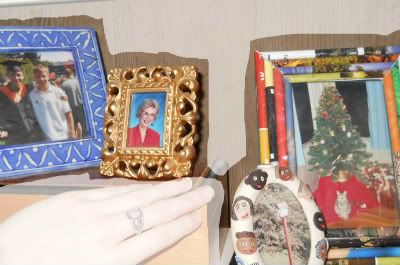
4 picture frames
This whole box of STUFF. You can stop at the pareos that are folded in there. I don't think I need those.


1/7/12

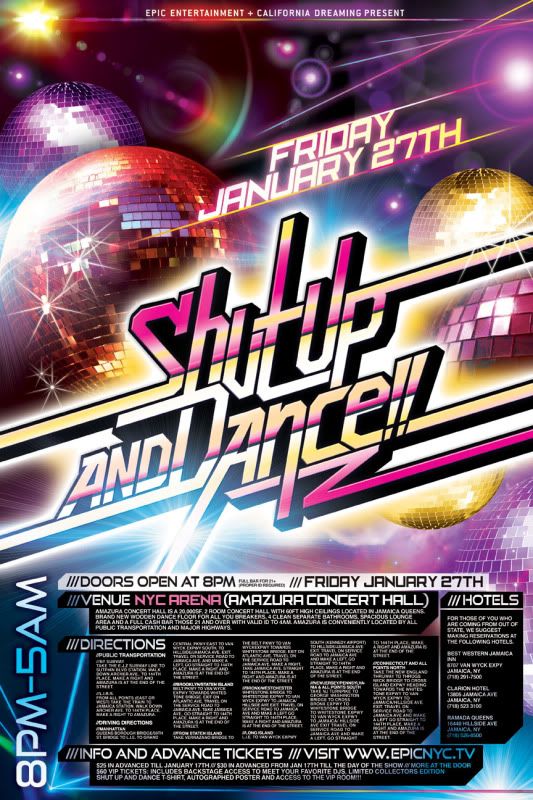
Shut Up and Dance! Featuring Afrika Bambaataa


Excited to be dancing at this with Peek A Boo Gogo. :)

1/3/12

Necklace for a mutual birthday


On the close-up you can see how I attached the strings of beads to the hammered ovals with tiny loops of chain.

12/3/11

Response: The Barnard Project

Today, December 3, at 2 pm, I attended a show at New York Live Arts, formerly Dance Theater Workshop, featuring choreography by David Parker, Ivy Baldwin, Susan Rethorst, and Sidra Bell: “The Barnard Project.” It was a professional choreography showcase featuring many Barnard dance students.

The first piece, entitled “E Pluribus” and choreographed by David Parker, featured twelve dancers clad in gaudy shades of yellow. The music was an eclectic variety—including some from La Bayadere, some sacred-sounding music in Latin, an American folk song, and “Downtown” by Tony Hatch. In this piece they made a lot of sounds with their bare feet, including by tap dancing. It had its cute moments and its funny moments, but they didn’t come until later on. The beginning was honestly pretty boring. The dancers walked around, thumping the ground once in a while with a heel or their toes, doing small movements in a repetitive pattern. They didn’t walk well, though. They weren’t strong modern walks in the style of Graham or Taylor, and they weren’t ballet walks. They were some awkward kind of in-between thing, and unfortunately I don’t think it was on purpose. It just seemed like none of the dancers knew how to walk well.

Next was a piece by Ivy Baldwin, called “Howl.” I hated the costumes for this. I sort of thought they were supposed to be of a conservative, housewife, Fall-ish theme, but even that is kind of broad and doesn’t describe much of anything. This dance featured a lot of wiggling, jiggling, wagging, waving, gyrating, convulsing, percolating, and shaking. A lot of the moves looked like things I would do (actually things I probably have done at some point) for fun. I was mostly interested and entertained during this piece, although I felt it was lacking in formations, patterns, unison, and other factors that tend to bring a piece together and make it whole. And I didn’t like one of the dancers. I didn’t think she was holding her center. If I weren’t a dancer, it probably wouldn’t bother me, but I can tell, so I was bothered.

After intermission was “Jazz out of Water,” a piece by Susan Rethorst in collaboration with the dancers. Maybe collaborating with the dancers wasn’t a good idea. During this piece, I leaned over to Devon at one point and informed her that I was going to slit my wrists. The piece was mostly in silence, except for the few times a few bars of some dull jazz music played and then faded back out. I don’t remember anything cool or interesting from this piece, and in fact it was the first time I’ve ever watched a show and thought, man, I wish they would do an arabesque or a pirouette or something! It was all just slowly walking, and moving arms, and sitting on the ground, and then not sitting on the ground, and I don’t even remember because I was staring into space. I was awoken a couple times by the strobe-like stage lighting that served no other discernable purpose than to remind the audience that people were dancing. I clapped because this piece was over.

Last was Sidra Bell’s work “Mass Observation.” The dancers began by coming down the audience stairs in a line on each side. They faced the stage and moved their arms like drones. I almost got poked in the eye by a gloved finger. I wasn’t sure where to look, because there were two dancers onstage, but there were also dancers next to me, and what if I was supposed to watch them? Were they important? Leda calls this “making the audience watch a tennis match,” because your head goes back and forth from one place to another. There was a lot of that in this piece, and in the show in general. Ultimately I decided on the dancers who were on the stage, because if I turned my head to the right I was looking at a man’s shiny American Apparel copper leggings-clad butt. American Apparel should have been paying royalties to this show, for the amount of their clothes the dancers wore. (And as a side note, they should have cut the tags from the leggings. The tags gave everyone a weird lump in the middle of their backsides.)

I liked this last piece best of all of them (which isn’t saying much!), because at least they moved sometimes. There was still a lot of foot stomping, arm gesticulating, and wiggling—the theme of the show—but out of all the pieces, I felt this one had the most instances of interesting movement. I didn’t “get” it; was it about a shiny-butt fierce runway diva drone army from outer space? But I was impressed by many of the dancers and I felt that this choreography showcased them the best. For the most part, though, the mood of the piece just made me feel nervous.

The dancers who were in this show are probably great, well-trained, talented dancers, but I couldn’t tell you that for certain, because all I saw them do was meaningless movement that didn’t require much technique. Not that a lot of it wasn’t interesting, or innovative, but I think in order for me to enjoy a show, it has to be a mixture of things I recognize and things that are new and surprising and interesting. Or, maybe it can all be new and weird and different, but well-organized and executed. It’s hard to pinpoint, but whatever the golden combination is, this show was lacking part of it. When I see a dance show, I like to feel something. I like it when I have an emotional response to the dancing that lasts with me long after the show is over. I didn’t get that from The Barnard Project.

10/28/11

Dance Review: Morphoses, “The Bacchae”

The “Plot Synopsis” of Morphoses’s “The Bacchae” doesn’t help at all. In fact, one might be better off not reading it and just enjoying the show as an abstract exploration of sound and stage elements. Or trying to enjoy it, anyway; one of the patrons in front of me whispered to the other while there was dancing, “do you want to go?” And the one next to me discreetly checked the time on her cell phone.

“The Bacchae," at the Joyce October 25-30, is a 50-minute piece with no intermission choreographed and designed by new Resident Artistic Director Luca Veggetti and directed by Director and Co-founder (the other one, Christopher Wheeldon, left in 2010) Lourdes Lopez. It features 11 dancers with severe hairstyles in sleek, mock-turtleneck leotards in navy and burgundy, and stiff pants with a tinsel-like sheen or, alternately, shorts with the brand logo visible from the cheap seats. And socks—whose relevance will be disclosed shortly.

The stage is lined with three silky backdrops which flutter interestingly in the background but cause for really awkward entrances and exits; the dancers have to scoot underneath the fabric, as there are no openings. The original music and sound design (this term is probably more apt) by Paolo Aralla, while interesting to be sure, frequently startles the audience with sudden loud pings and raps. It is supplemented by a live flutist, Erin Lesser, whom I found distracting when I saw the show, because I was focused on whether she was actually playing her instruments or miming. (She was playing.)

A puppeteer, Candice Burridge, opens the show with a little wooden person whom we never see again after that. Then there is a group number in which the dancers’ impeccable technical training is on display. They have perfect, effortless control of their bodies, almost like robots. At one point these dancers stay in impressively precise and tight formation as they walk and quickly switch direction.

The pas de deux sections in “The Bacchae” are worth the price of admission. There are unimaginable, inventive lifts performed seamlessly and with visible ease. They don’t even look like lifts; they look like a continuation of one move magically into the air and back down again without any hoisting or grunting or heave-ho. I came to the logical conclusion that all the men in this company have Herculean strength and that all the women are the size and weight of underage Chinese Olympic gymnasts. The partnering is really that brilliant.

But unfortunately, watching “The Bacchae,” you may feel nothing. I felt nothing. Rather, I felt like I was waiting for something noteworthy to happen, and then I felt impatient, and then I felt annoyed. The problem with this piece is that it’s trying too hard to be something—to be a little of everything. The puppet; the live instruments onstage; the voice of God or whatever it’s supposed to be; the guy who comes into the audience to speak one line; the lip syncing (yes I said lip syncing); the sticks that were whipped around (in my head I told the dancers, you better not let go of that f***ing thing); the utilization of the Joyce’s brick wall in the background (been done); the embarrassingly Forsythe-ian influence (this is where the aforementioned socks come in).

The choreography for the solos danced by Frances Chiaverini and Gabrielle Lamb makes them look spastic, and it might as well be improvisational because there isn’t a single move that either one of them does that seems deliberate, meaningful, or necessary. I understand that some people like this sort of style, but I was awfully bored. It’s the type of dance that never stops; the dancer is always putting some limb somewhere or moving in some inventive new way, and no shape ever stops to register, and nothing appears to have any feeling or emotion behind it. Granted, I’m sure it’s difficult to dance like that, but in the end what is the point?

In fact, most of the movement was like that. It was all perfect, but none of it meant anything to me. It’s a good thing this show ends with the seriously impressive partnering so I didn’t have to leave with a bad taste in my mouth.

8/15/11

"Who Owns My Heart" Video Response


I think I'm prettier than Miley Cyrus. Just for the record. I felt like saying that.

Anyway, this is more tolerable than most of the music she's ever made before, in my opinion. I think it's because it sounds like every other catchy dance song on the radio that you ignore. Oh well, that's a step up from the rest of her stuff, which makes me grind my teeth and my eyeballs pop out with disdain.

Also, I believe in her wardrobe and makeup crews. The bitch is fucking ugly, but the head wrap on the bathtub look is cool, and the big hair/ nude lipstick look is pretty well done as well. Hope whoever's in charge of that is making bank, because they rock at their job if they can make Miley Cyrus look anything other than fugly.

7/14/11

SUBTEXT


Anyone else see the barely-disguised subtext in this ad by Dove?

Before: fat, Black.
After: thin, white.

Buy our product because it will make you go from undesirable ("Before") to desirable ("After")! Just look at that gradient.

Not impressed, Dove.

6/10/11

White Eyeliner Off the Runway

After seeing the recent runway trend of white eyeliner in Marie Claire and Nylon, I decided to have a go at it.

Runway:

And myself ...


I think if a white liquid eyeliner exists that would provide a more opaque line, the effect would be more dramatic. I just used a crappy Wet & Wild pencil, layered thickly.

Can I rock it? Maybe for a very special, funky occasion ... but as for everyday, the jury's still out.

6/8/11

New Far East Movement Video.

The newly premiered Far East Movement music video for their single "So What?" features barely-clothed (and I do mean barely; one of the swimsuits is just short of some sort of S&M lingerie) models rubbing themselves with Pepto Bismol and dancing on a stove.

... Yeah, a stove.


What the FUCK are they trying to say here? That women should get naked and get their hot bare asses back into the kitchen? Because look, it's so much fun! Cooking is a fucking sexy party every day! Your job as a female is to be a hot ass and make me some toast (see video re:toast).

I used to dig FEM because 1) Asians making waves in pop culture is exciting, 2) "Like A G6" is catchy, and 3) "Rocketeer" is kind of sweet (short video).

I think the band is trying to appeal to not only the club/dance/hip hop music scene, which they definitely are with the naked chicks and the swagger, but to a KPop fan base as well. If you've looked at a T.O.P. video lately ("Turn It Up"), you'll notice Korea getting raunchier with their vids. Which of course I think is Korea trying to be more like America. Vicious fucking cycle.

Anyway, I'm not impressed, Far East Movement. More like offended.

6/4/11

iamamiwhoami

It helps (somewhat) to have watched all the preceding uploads, but even without doing so ...


5/31/11

"College Dance and the 'Real World'"


Congratulations to me: I've just been published by the awesome internet magazine the-vu.com!

My article examines university dance programs' graduates' preparedness for what we refer to as "the real world." It would not have been possible to write without the kindness of my interviewees during a stressful time in their lives. I am totally stoked to be published. You can read it here.

5/24/11

American Apparel Published Me!


My photo has been published by American Apparel! I am a paid, published model now, and it feels super cool.

5/21/11

Thanks Michael ...


5/11/11

If/Then Dance Premiere Rehearsal Video


Show this Friday in the Olmsted Theater
Adelphi University
7:30 p.m.
Free Admission (suggested donation)

3/21/11

"His death drew sharp criticism from animal activists, who had complained for years that Berlin Zoo officials should not have hand-reared the cub after his mother abandoned him in 2006."
http://www.nydailynews.com/news/world/2011/03/21/2011-03-21_video_surfaces_showing_knut_the_polar_bears_death_tourists_gasp_at_bears_final_m.html#ixzz1HGKof3RS

Remember this post I put up about the baby monkey abandoned by its mother only to be adopted and nursed by a zoo, and how I mused about the ethics of that?

Read about the sudden, sort of tragic death of the popular polar bear Knut at the above link.

3/19/11

Doug Varone’s “Chapters” Like a Novel You Can’t Put Down

by Natalie Walters

The 20 emotive and aptly titled “chapters” that comprise Doug Varone’s Chapters from a Broken Novel at the Joyce until Sunday feel, to an audience member, like one’s own biography. Skillfully danced to an original, cinematic-sounding score by David Van Tieghem, Chapters takes the viewer through an emotional landscape to which dancers and non-dancers alike can relate.

Varone’s loose but purposeful and clean style was exhibited from the beginning, with signature arm slashes and backward reaching ball-changes on display in the first chapter, Spilling the Contents. A beautiful falling-and-getting-back-up-again themed solo, Another Failure, danced by the mesmerizing Natalie Desch, immediately followed. Her frustration, so expertly choreographed as to be credible, was palpable. Her facial expression read as true, and even her grunts of distress seemed to come from a real place. But when she emoted it was not—and this holds true in general for Varone and Dancers—melodramatic.

Varone has a great sense of where the line between the realistic and the overly theatrical rests. There were two dances where this was particularly true: Erased by Degrees and Ron Tells the Truth. It speaks of Doug Varone’s Dancers’ performance skill that they evoke such empathy from the audience as they do with these dances. Erased has the power to put your stomach in knots and your shoulders up to your ears as you watch Erin Owen react to in-your-face-attacks by her fellow dancers. But I have never seen anything so captivating and honest as Ryan Corriston’s internal struggle with Truth. He shook his head, clapped his hands over his mouth, even audibly sucked in his breath. He bit his knuckles, and turned beet red, fighting impulses. This chapter displayed Varone’s genius and Corriston’s talent melding into something heart-wrenchingly real, to which any human watching it would unavoidably relate.

But Varone also knows how to manipulate this theatrical line, to provide the evening with a little comic relief. In sharp contrast with the tension of Erased, Tile Riot let us into an intimate bathroom self-celebration by Owen. In it, she admired herself in the mirror, toward the audience, putting on lipstick and primping. She did a little dance, seducing the imagined mirror. It was endearing, and Owen was adorable—and highly versatile, having also played the role of the trodden-upon earlier in the show.

Some chapters were admittedly less memorable than others. Repeated Routines, for instance, was exactly what it sounds like, as was Rewind. Often the group dances became a bit blurred; pieces like these sometimes felt like filler for the more specific chapters like Erased by Degrees and Ron Tells the Truth, where individual dancers shone. Though always skillfully danced and beautiful and interesting to watch, sometimes during group pieces the Varone Dancers’ tendency toward a narrow, inward focus with the eyes shut out the audience somewhat. They seemed very conscious of each other’s presences, but this did not always include the audience in the way the soloists did.

Doug Varone and Dancers are especially good at bringing concepts to reality through dance. Some of the chapters’ titles cannot be danced literally, but somehow they made perfect sense, and title and the movement were one and the same. You don’t know what The Ghosts of Insects look like until you’ve seen it danced by Varone’s Dancers. The musical score played a role in this that can’t be ignored, but the choreography worked with, rather than relied on, the sound. The music for Glass was reminiscent of glass breaking, but even so, there was a sense of shards cutting through the bond between Netta Yerushalmy and Ryan Corriston, and their movements were sharp like broken glass. Each time he pushed or flicked her away it was like a piece of glass falling from a cracked window.

Varone has a signature style, which often has the appearance of being loose and organic, but his technically well-trained dancers move cleanly, precisely, and unaffectedly within this style. Combined with the minimalist set of a white curtain by Andrew Lieberman and light play by Jane Cox, it allows for Varone’s artwork and the choreography to speak for itself, through the tightly knit cooperative of dancers that comprise his company. The result is raw and beautiful.